Kodak Photo CD:
The Model T of image digitization
Lincoln Cushing, October 9, 2026
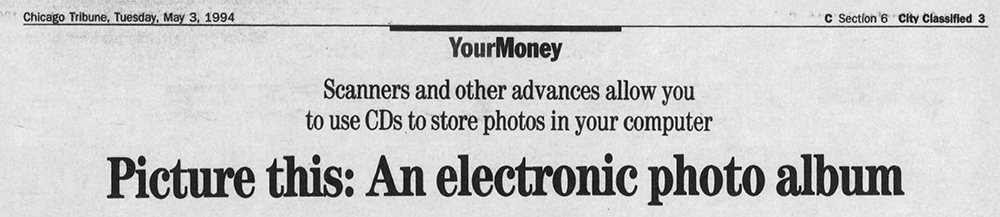
Back in the early 1990s, when dinosaurs ruled the earth and people read books printed on paper, there was only one way to prepare a color photograph or slide for high-quality reproduction. You took it to a commercial service bureau, they would mount your print or transparency on a drum scanner and they would produce four film negatives (cyan, magenta, yellow, and black) at one size. It was not fast and it was not cheap, and if you screwed up the size you had to do it all over.
If you wanted to share a few color prints some copier places had color Xeroxes, but the quality wasn’t great, and they couldn’t scan transparencies. That was a problem for artists and archives, since the gold standard for documenting images was 35mm Kodachrome 25 slides.
Enter the Kodak Photo CD.
Announced in 1990 and released in mid-1992, this service was a transformative breakthrough. One could go to a service bureau – often a photo finishing business – and get 100 slides scanned onto a gold CD at five levels of resolution. Not a DVD, a Compact Disk. Images were compressed in a proprietary .PDC file type. This was before flash drives and small external hard drives. Disks were rewritable, so a partial disk could be added to until the 100-image limit was reached. And the jewel case included a lovely grid of thumbnail images.
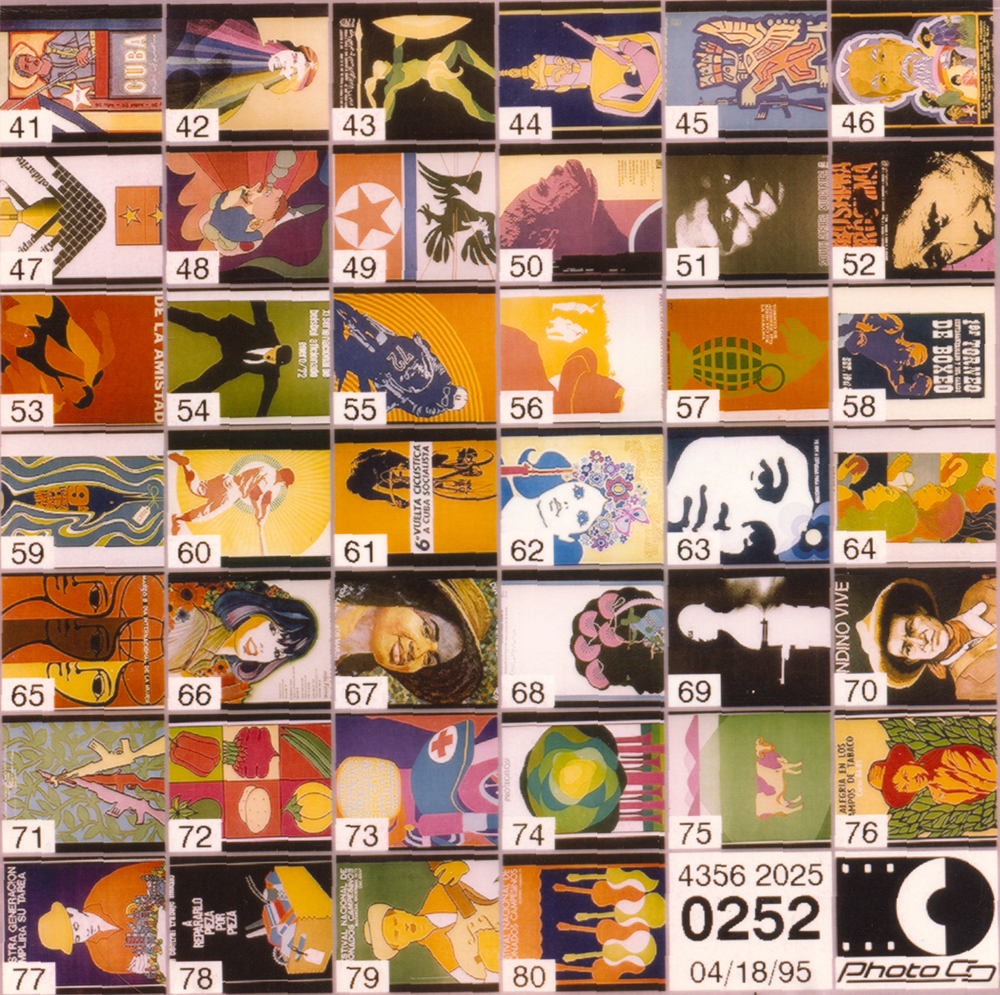
The largest image was 2048 × 3072 pixels, equal to an 8x10 photo at 300 dpi. This was good enough to go to press with. Service bureaus would charge around $1 per scan, making this insanely affordable. Kodak Photo CD’s not only drew the attention of designers and graphic artists, they appealed to larger archives and special library collections, such as Harvard University, UCLA’s Fowler Museum, and the University of Houston.
Realizing the future of digital imaging, Kodak also released an electronic cataloging program, Shoebox. A reference to the common habit of tossing one’s snapshots into a shoebox for home storage, it came on two floppy disks, and was very intuitive to use. It was visually thrilling to add images and searchable metadata and create collections, all on a computer screen. Before then one had to tediously create and print labels and affix them to slides.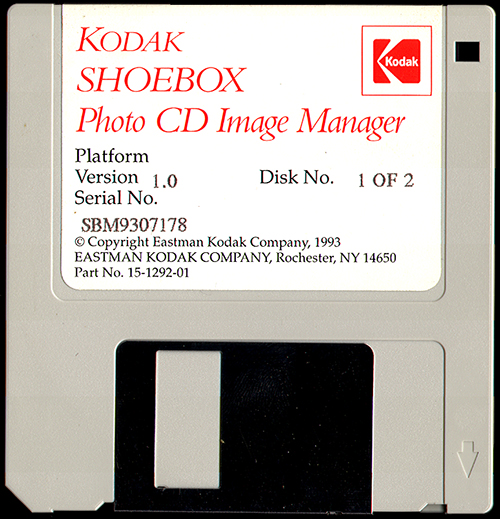
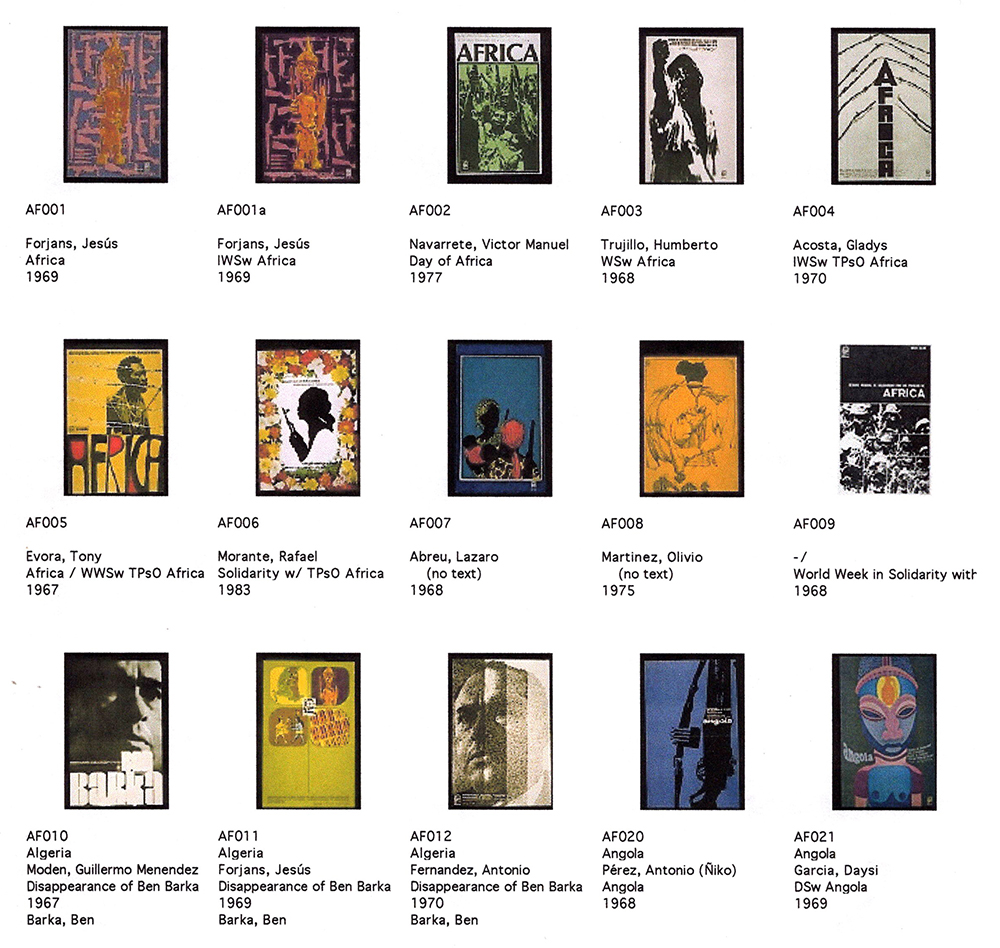
I began using the photo CD’s and Shoebox in 1995 when building the first catalog raisonne of Cuban international solidarity posters produced by OSPAAAL. I had all the high-quality slides but it was very clumsy sharing 3-ring binders of slides in sleeves. Kodak’s products changed everything.
I was hooked, and continuing with the trajectory of the OSPAAAL collection I published my first book Revolucion! Cuban Poster Art in 2003 through Chronicle Books using these scans. It’s possibly one of the first art books to do so.
These days every cell phone can shoot a decent-quality image. Yet I still honor the crucial transitional technology offered by the Great Yellow Father back in the mid 1990s.
Return to Docs Populi / Documents for the Public