"They made many promises, more than I can remember, but they never kept but one; they promised to take our land, and they took it."
The tortuous research trail to confirm a common quotation
Lincoln Cushing 6/8/2026
I recently wrote an essay with my colleague Danny Widener (“America cannot show me my terms of surrender: visual histories of Indigenous radicalism”) which will appear later this year in Radical History Review. The editor, with expected due diligence, requested a citation for the quote “They Made Us Many Promises” in a circa 1973 poster depicting the December 29, 1890 massacre at Wounded Knee based on a detail of an original circa 1920 image by Mató Nájin / Standin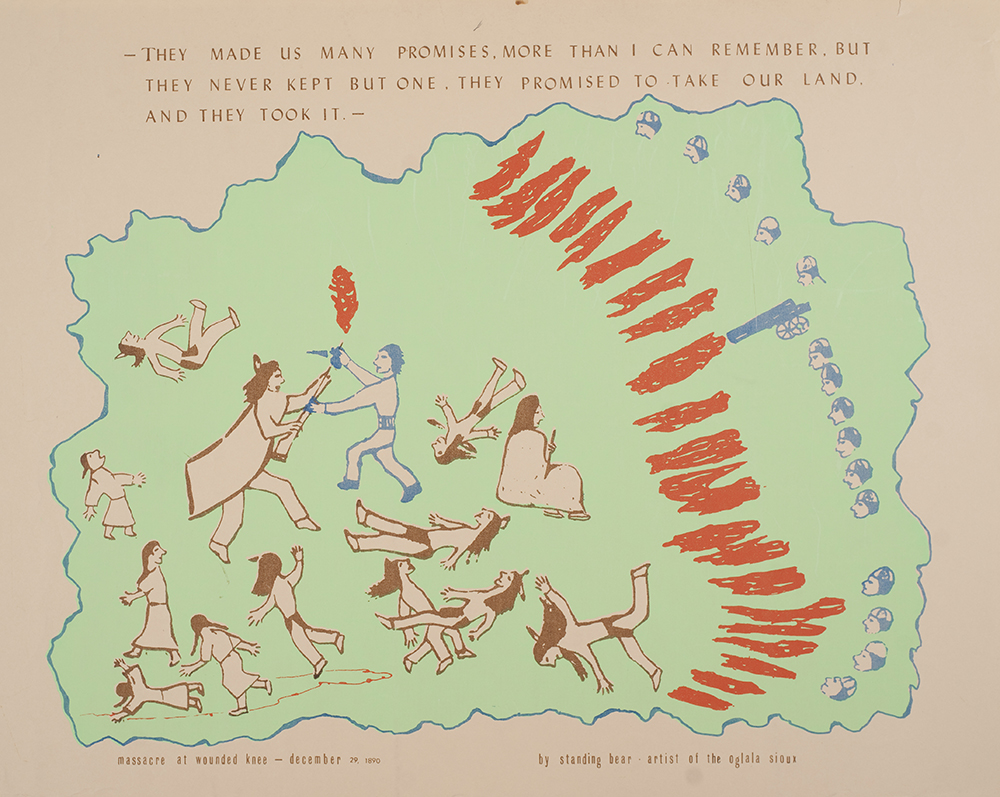 g Bear (Mnikowoju Lakota).
Easy, I thought. It’s part of a very popular and powerful quote that neatly describes the U.S. government's broken promises in treaties with first nations. It’s often attributed to Red Cloud, Oglala Lakota leader from 1865 to 1909:
"They made many promises, more than I can remember, but they never kept but one; they promised to take our land, and they took it."
Yet when I went to find the source of his quote – where and when he said it – I ended up with a different, but similar, quote:
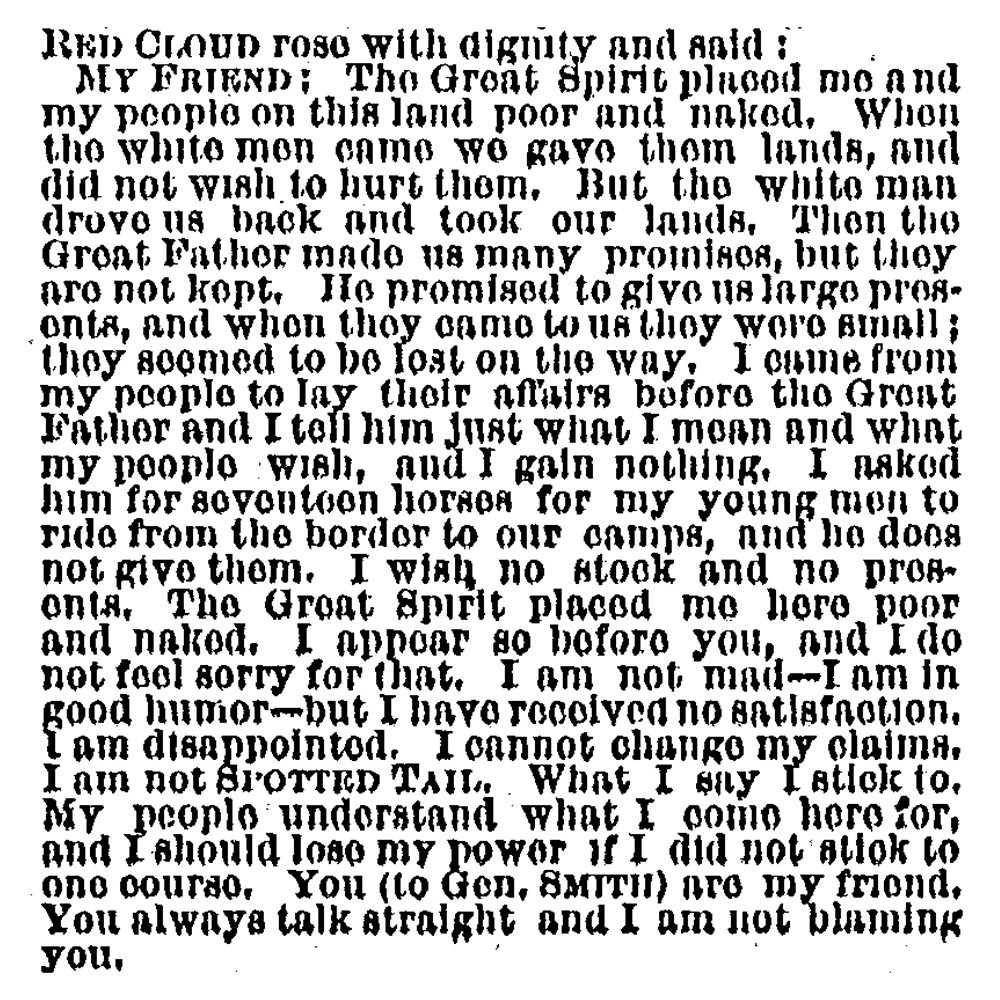
“When the white men came, we gave them lands and did not wish to hurt them, but the white men drove us back and took our lands. Then the Great Father made us many promises, but they are not kept. He promised to give us large presents, and when they came to us, they were small.”
It’s pretty authoritative, published in the New York Times June 16, 1870, the day after he’d spoken before the Council of Peace at the St. Nicholas Hotel in New York.
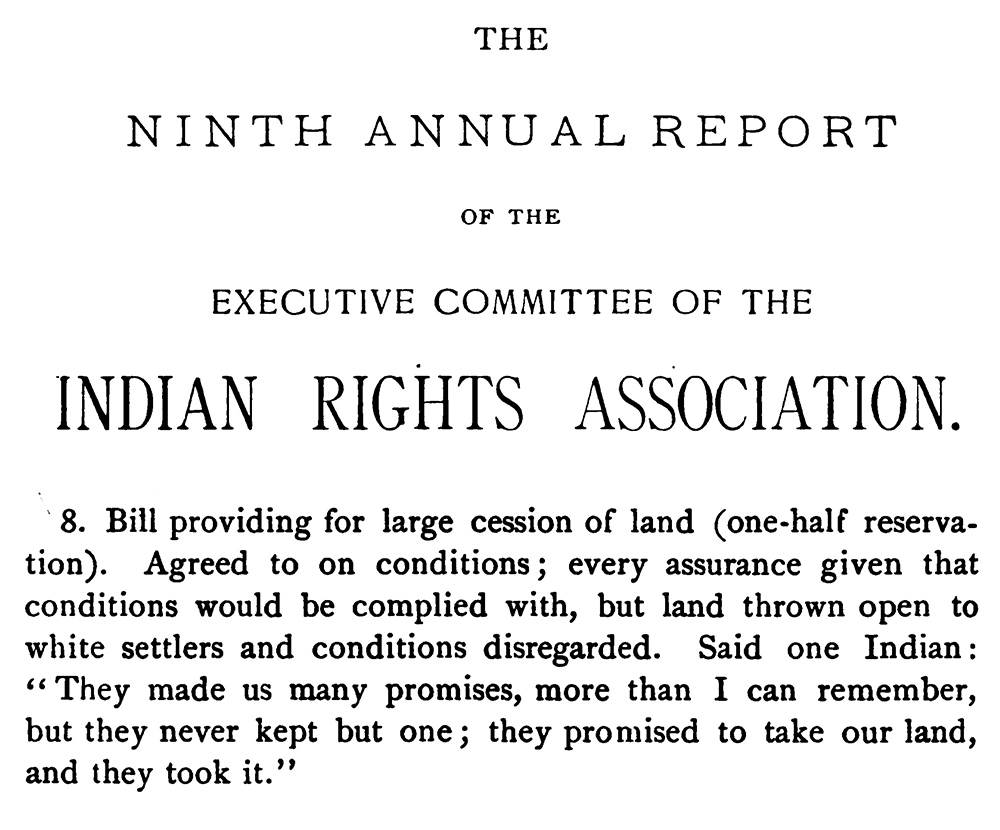
But if Red Cloud didn’t say that popular version, who did? It turns out that version was cited by Robert M. Utley in his 1963 Yale University Press title The Last Days of the Sioux Nation. Utley described it coming from “an old Indian” on the Sioux reservation, recounted to the Reverend William J. Cleveland and published in the 1891 Ninth Annual Report of the Indian Rights Association.
Utley’s use of the quote in his book was picked up by Indian rights sympathizers. “Now that the Buffalo’s Gone" was a 1970 British television documentary narrated by Marlon Brando as Samu, a Nisqually (Washington state) medicine man. Buffy Sainte-Marie performed the title song. (Not to be confused with the 1967 short film by the same title made by UCLA student filmmaker Burton Gershfield nor a 1982 book with the same title by Alvin Josephy Jr.)
It seems that the source of conflating Red Cloud with the “old Indian” quote version began with the publication of Dee Brown’s bestselling 1971 book Bury My Heart at Wounded Knee. Brown’s book embedded the quote at bottom of a 1905 photo by Edward Sheriff Curtis from the Library of Congress collection. The photo was of was Red Cloud, but was not identified nor was the quote listed in the index. Michael Blake’s review of Brown’s book in the Los Angeles Free Press July 2, 1971, ended with “the quote” and credited it to Red Cloud.
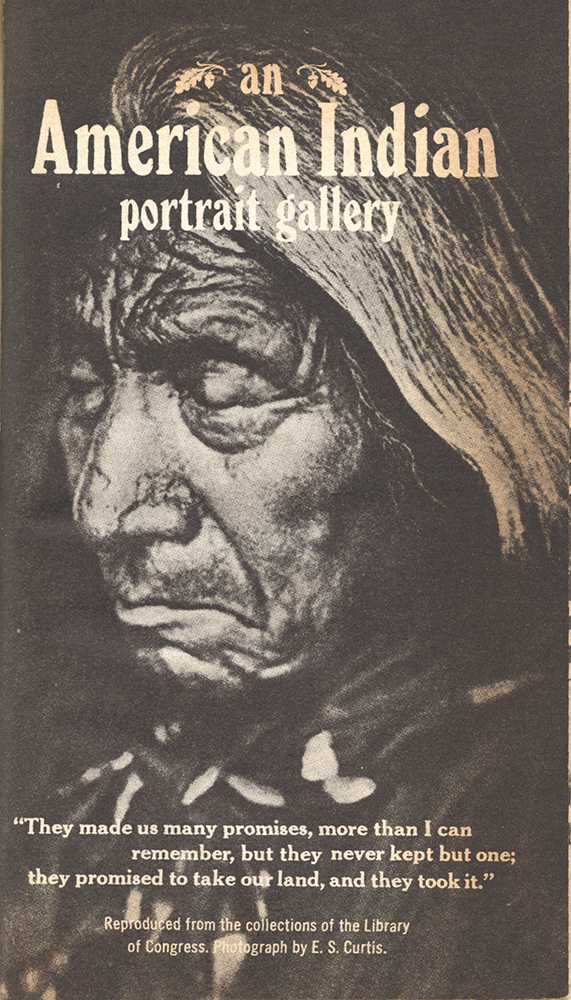 The quote, now cited as being Red Cloud's, seemed to “go viral” from there.
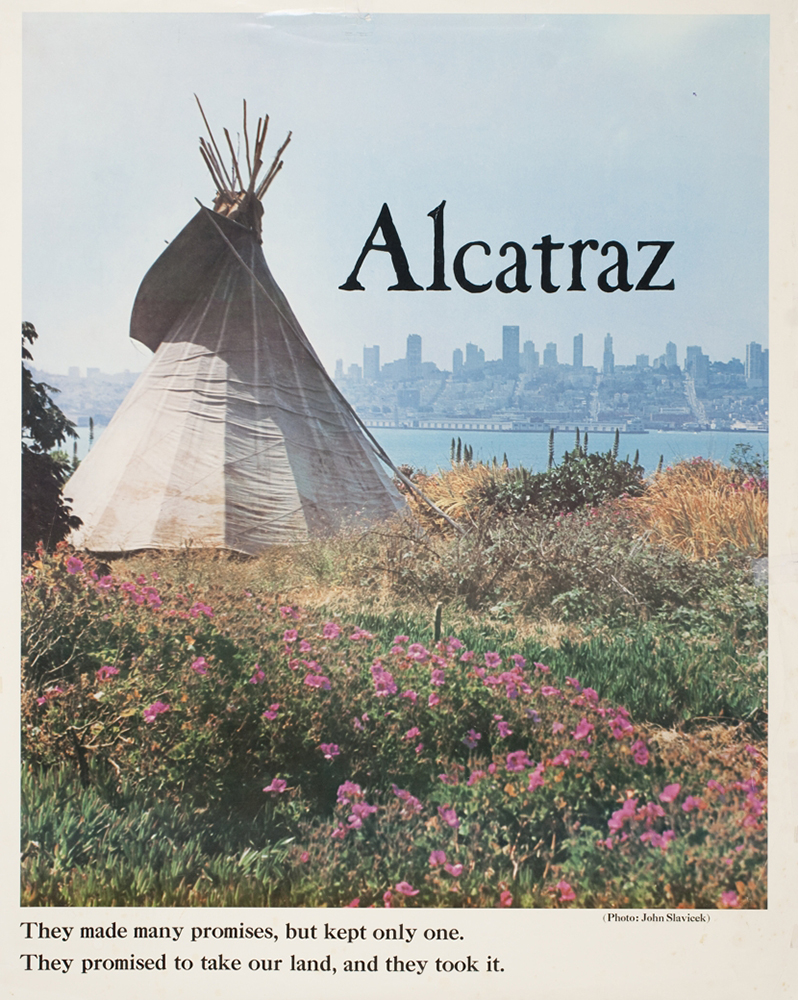
It appeared in the December 1971 issue of the underground GI newsletter Semper Fi (Iwakuni, Japan) and on a poster made around 1972/1973 after the Indian occupation of Alcatraz, which was only credited to the photographer (and bankruptcy advocate) John Slavicek. It led an article in the Sunday Oregonian December 8, 1974, on Klamath struggles, described as being on a bumper sticker.
Some research excluded possibilities and supported timelines. The occupation of Alcatraz by Indians of All Tribes published two newsletters, January and February 1970, but the quote did not appear in either.
The quote is described in Google search AI Overview as "a powerful, famous statement widely attributed to the Apache leader Geronimo." Their source? An Indian Chief Legend coin series minted in Australia. Another history site says it was from Chief Joseph.
What to do? The shorter and commonly used quote is somehow more powerful if uttered by Red Cloud than "an old Indian," but it wasn't him.
We don’t need Artificial Intelligence or Russian bots to muddy our own history. We are perfectly capable of doing that ourselves. But as more and more print content gets digitized, more of our own history is becoming available. And researchers now have more powerful tools than ever. I was able to find a wide array of documents from the comfort of my home. Some research was simply on the public web, some through paid databases and physical book copies. We have fewer excuses to let incorrect historical facts slide by, we just have to roll up our sleeves to do that.
-30-
Images:
“They Made Us Many Promises” and Alcatraz posters courtesy Lincoln Cushing - Docs Populi archive
Ninth Annual Report of the Indian Rights Association, 1891, via Hathi Trust
Red Cloud testimony, New York Times June 16, 1870, NYTonline archives
"An American Indian portrait gallery" in Bury My Heart at Wounded Knee, p. 223 (paperback edition)
Other sources:
Semper Fi newsletter 12/1971 via JSTOR
"Now that the Buffalo's Gone" 1970 film, The News of Cumberland County 11/14/1970
Gilder Lehrman Institute of American History (Alcatraz newsletters)
Return to Docs Populi / Documents for the Public