“Them damn pictures” in the
service of social justice
Lincoln Cushing, October 21, 2026
Note: This is an essay I contributed to the Canadian print-only magazine Applied Arts' Summer 2026 photography, illustration & design annual issue. I was invited by editor Will Novosedlik, where I'm joined by pieces by Chaz Maviyane Davies and Ruben Pater and a feature by Will where he provocatively notes: "Fascism is spreading like a virus. Here's what a handful of brave creatives are doing about it."
In 2011 the iconic guerilla urban graphic artist Banksy posted the phrase “If graffiti changed anything It would be illegal.” And he was right, sort of.
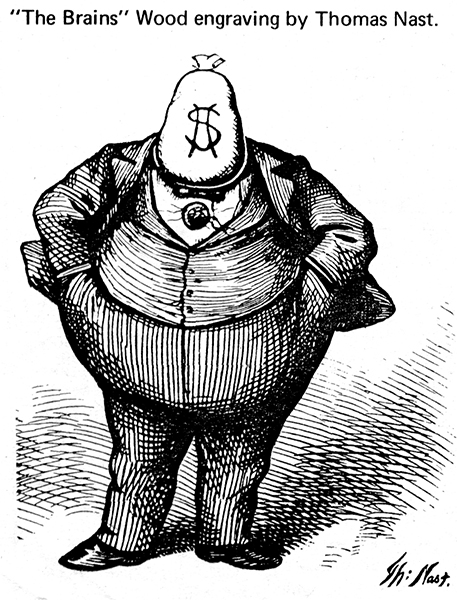
Forces of conservatism battle forces of progressive change in many ways, from elections to legislation to courts to coups. In the dynamic contested terrain of public messaging, radical graphics and posters have always played an important role. Autocrats can dismiss opposing facts, but what really gets under their skin is satire. During the 1860s and 1870s, New York City’s infamously corrupt politician William “Boss” Tweed was deftly targeted by cartoonist Thomas Nast, eventually complaining that “I don’t care so much what the papers write—my constituents can’t read . . . it’s them damn pictures.”
Banksy’s summation is clever but falls short. True, in many cases repression of oppositional art is based in law. The 1963 and 1986 Publication Acts in South Africa’s Apartheid regime banned media deemed "undesirable" or subversive. Many artists paid a price.
But it’s the enforcement of censorship that really matters. Popular art flourished in Chile when President Allende was democratically elected in 1970, but after the 1973 Pinochet coup murals were whitewashed, posters were burned, and artists were imprisoned, tortured, exiled, and “disappeared.” When I went to Chile in 1985 to set up a community screenprinting studio, I witnessed an almost weekly drama of soldiers arriving in a working-class neighborhood and painting out (my tagger son says that’s now called “buffing”) whole murals, only to be lovingly repainted by the community, again and again.
And censorship can be economic, not legislative. Government agencies and “mainstream” media have far more resources and reach than grassroots organizations. That’s why most oppositional cultural forms are inexpensive and human-based – screenprinting, street theater, sidewalk stencils, banners in demonstrations, little stickers one can place anywhere and everywhere (the long-lived labor organization Industrial Workers of the World loves them, calling them “silent agitators”).
So one of the lessons we can learn is that art alone, no matter how powerful, does nothing to stop a war or incipient fascism. It’s only when artwork is coupled with solid political organizing and dissemination that it has teeth. And “art alone” has another downside. If the society we want to see is less individualistic and competitive, we need to learn how to work cooperatively. That’s a feature of successful progressive arts organizations.
One of the effective media voices of the “long 1970s” was the Chicago Women’s Graphics Collective. They described their process this way:
“… Collective working and living is important in creating the revolutionary society within the old… We try as much as possible to share the physical work, our art, our skills, and our personal feelings. We have 'poster-think' sessions where we build on each other’s ideas until we have a satisfactory slogan and design.”
Other art collectives include the Taller de Grafica Popular, Mexico (1938-1950s), San Francisco’s La Raza Silkscreen / La Raza Graphics (1971-1995), and See Red Women’s Workshop, London (1974-1990s).
Some collectives printed a wide range of propaganda for community groups. The iconoclastic journalist A.J. Liebling was right when he wrote, “Freedom of the press is guaranteed only to those who own one.” So activists rolled up their sleeves and did just that. The first independent New Left ancestor in the United States was Glad Day Press in Ithaca, NY (1967-1973), and others followed, including Peace Press, Los Angeles (1967-1987), Salsedo, Chicago (1973-2021), Inkworks Press, Berkeley (1974-2015), and Vancouver’s Press Gang (1970s-2002). They produced thousands of posters, flyers, placards, and leaflets.
The message matters, too. Thomas Nast understood the impact of satire and humor. And globally, the most subversive messages are ones which educate about how different struggles intertwine. “Your struggle is our struggle.” Occupied Palestine and occupied First Nations land, jack-booted government thugs in 2026 Minneapolis and jack-booted government thugs in the 1943 Warsaw Ghetto. Solidarity enables and guides.
Effective posters usually combine a clever message with an accessible image, and perhaps most importantly, guide the viewer as to what to do about that issue. It used to be a phone number or a mailing address, now it’s a website of a QR code.
New agitational media have not replaced old media, they have joined to be ever more effective. A graphic can appear online as a downloadable large-format PDF and also be lovingly hand-printed, sold to raise funds. People love DIY craft and appreciate cultural objects that validate their lives. I remember watching a colleague screenprinting posters at a 2011 Occupy Movement sit-in. The line for people to take a print home was longer than the line for free food. That poster will go on a kitchen wall for a month, a year, perhaps longer, a steady reminder that individuals, collectively, can move the needle of social justice.
That’s how it’s done.
Return to Docs Populi / Documents for the Public